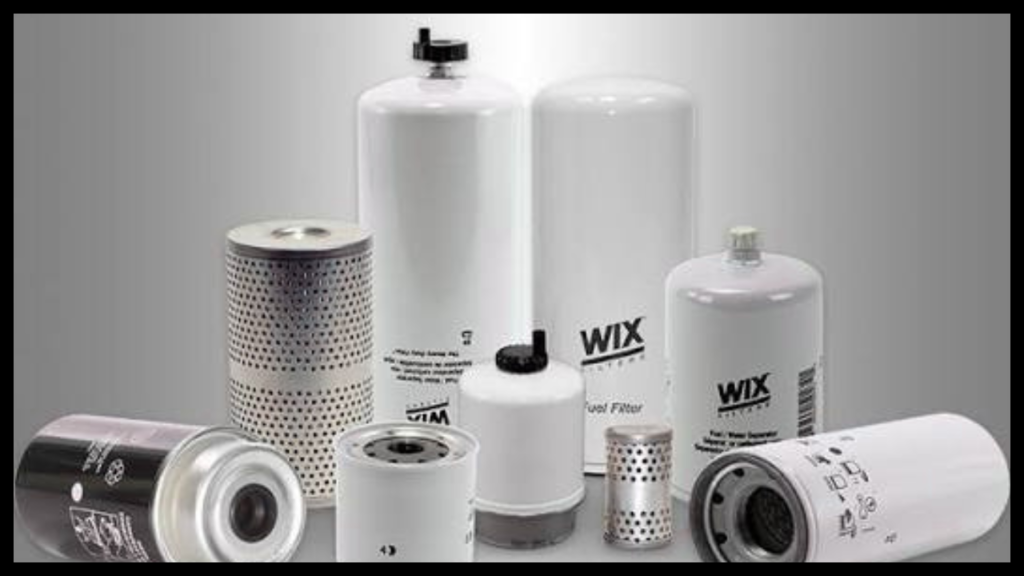

Wix Filters is a well-known filtration brand that produces filters for passenger cars, light trucks, heavy-duty vehicles, agricultural equipment, industrial applications, and other machinery. The brand offers several filter categories, including oil, air, cabin air, fuel, transmission, coolant, and hydraulic filters. WIX says it has been developing filtration products since 1939 and provides more than 16,000 filter references across its product range.
Choosing the correct filter is an important part of vehicle maintenance. A suitable filter removes unwanted contaminants from oil, air, fuel, or other fluids before they reach critical vehicle components. However, the best filter is not simply the one that looks similar to the old one. It must match the vehicle, engine, application, dimensions, specifications, and required filtration system.
This guide explains what Wix Filters are, the different types available, how they work, how to find the correct filter, when to replace one, and what buyers should consider before purchasing.
What Are Wix Filters?
Wix Filters are filtration products designed to remove contaminants from fluids and air used by engines, vehicles, machinery, and other equipment.
The brand produces filters for multiple applications rather than focusing on a single vehicle type. Its product range includes passenger car and light-truck filters, heavy-duty filters, and industrial filtration products.
In an automobile, filtration is important because engines and other mechanical systems depend on relatively clean oil, air, and fuel. Dirt, dust, metal particles, water, and other contaminants can potentially contribute to wear or reduced system performance.
Different Wix Filters perform different jobs:
- Oil filters remove contaminants from engine oil.
- Air filters clean air entering the engine.
- Cabin air filters help reduce dust, pollen, and other contaminants entering the passenger compartment.
- Fuel filters help protect the fuel system from contaminants and, depending on the application, water.
- Transmission filters help filter transmission fluid.
- Hydraulic filters are designed for hydraulic systems.
- Coolant filters are used in applicable cooling systems.
WIX’s official product catalog lists these categories across passenger-car, light-truck, heavy-duty, and other applications.
Are Wix Filters Good?
Yes, Wix Filters are generally considered a reputable filtration brand, but the correct filter must be selected for the specific vehicle or equipment.
WIX has been in the filtration industry since 1939. The company states that its products undergo quality assurance and testing, while its manufacturing systems follow relevant quality standards. WIX is also part of the MANN+HUMMEL filtration group.
However, no filter brand can make an incorrect application suitable. A high-quality filter that does not match the vehicle’s specifications is still the wrong filter.
For that reason, compatibility should come before brand preference when selecting a replacement filter.
Types of Wix Filters
One of the biggest advantages of Wix Filters is the variety of filtration products available. The exact selection depends on the market, vehicle, and application.
1. Wix Oil Filters
Oil filters are among the most important filters used in an internal-combustion engine.
Engine oil circulates through the engine to lubricate moving components. During operation, the oil can collect particles and contaminants. The oil filter helps capture these particles before they continue circulating through the lubrication system.
WIX states that its oil filters provide critical engine protection and are designed for different driving environments.
Why Oil Filters Matter
A good oil filter can help:
- Remove contaminants from engine oil
- Support clean oil circulation
- Protect internal engine components
- Support proper lubrication
- Reduce the circulation of unwanted particles
The correct replacement interval depends on the vehicle manufacturer’s maintenance schedule, oil type, driving conditions, and the specific filter application.
Wix XP Oil Filters
WIX also offers WIX XP oil filters as part of its product range. The availability and specifications depend on the vehicle and market. Buyers should check the official catalog rather than assuming every XP filter fits every application.
2. Wix Air Filters
An engine needs air for combustion. However, the incoming air can contain dust, dirt, pollen, and other particles.
A Wix air filter is designed to help prevent harmful contaminants from entering the engine through the intake system.
WIX describes its automotive air filters as products engineered with filtration media to keep harmful contaminants away from the engine.
Benefits of an Engine Air Filter
A properly functioning air filter can help:
- Keep intake air cleaner
- Protect engine components
- Support efficient combustion
- Reduce contamination entering the engine
- Maintain proper airflow when the filter is in good condition
A severely restricted or dirty air filter may affect airflow. However, replacement should be based on inspection and the vehicle manufacturer’s maintenance recommendations rather than an arbitrary mileage number.
3. Wix Cabin Air Filters
A cabin air filter serves a different purpose from an engine air filter.
Instead of protecting the engine, a cabin filter helps clean air entering the passenger compartment. Depending on the filter design and vehicle application, it can help reduce dust, pollen, debris, and certain odors or pollutants.
WIX states that its cabin filters help prevent contaminants, debris, and outside odors from entering the vehicle’s interior.
Some WIX cabin-filter products also incorporate specialized technologies for particular applications. For example, WIX’s European information describes Microban technology designed to help protect certain cabin filters against bacterial and mold growth.
Signs a Cabin Filter May Need Attention
Common signs can include:
- Reduced airflow from the vents
- Unpleasant odors
- More visible dust from the ventilation system
- Poor ventilation performance
- A filter that appears heavily dirty during inspection
The exact replacement interval varies by vehicle and driving environment.
4. Wix Fuel Filters
Fuel filters help protect the fuel system by removing contaminants from fuel before they reach sensitive components.
Modern fuel systems can have relatively precise components, making fuel cleanliness important.
WIX describes its fuel filters as products designed to protect fuel systems from contaminants, while some applications are designed to separate water as well.
Why Fuel Filtration Is Important
A fuel filter can help:
- Remove unwanted particles
- Protect fuel-system components
- Reduce contamination reaching injectors
- Support consistent fuel delivery
- Help maintain fuel-system cleanliness
The exact function depends on the filter and vehicle application.
5. Wix Transmission Filters
Transmission systems also use fluid that needs to remain sufficiently clean for proper operation.
Transmission filters are designed for applicable transmission systems and help filter contaminants from transmission fluid.
WIX lists transmission filters within its product range for relevant automotive and heavy-duty applications.
Because transmission designs vary significantly, it is particularly important to verify the exact application before purchasing a replacement.
6. Wix Hydraulic Filters
Hydraulic systems rely on fluid to transfer power and operate components. Contamination in hydraulic fluid can contribute to component wear and system problems.
WIX offers hydraulic filtration products for applicable heavy-duty and industrial applications.
These filters are not interchangeable simply because two products have similar dimensions. Hydraulic filtration requires attention to pressure, flow, filtration requirements, connection type, and equipment specifications.
7. Wix Coolant Filters
Some heavy-duty engines and cooling systems use coolant filters.
These filters are designed for specific applications and should be replaced according to the equipment manufacturer’s maintenance requirements.
WIX lists coolant filters among its heavy-duty product categories.
How Do Wix Filters Work?
The basic principle behind filtration is simple: the filter allows the required air or fluid to pass while trapping unwanted contaminants.
However, filter construction can be more sophisticated than it appears.
Depending on the filter type, construction may include:
- Filtration media
- Pleated filter material
- End caps
- Center tubes
- Sealing components
- Valves
- Metal or synthetic structural components
For example, WIX’s product information describes technologies and components such as glass-enhanced cellulose media, metal base plates, coiled springs, spiral center tubes, and silicone anti-drainback valves in applicable oil-filter designs.
The purpose of these components is not simply to make the filter look stronger. They contribute to filtration, structural integrity, fluid flow, sealing, or other aspects of filter operation.
Why Is Proper Filtration Important?
Filtration is important because contaminants can enter vehicle systems through normal operation.
For example, engine oil may collect particles generated during engine operation. Air entering an engine can contain dust and debris. Fuel can contain contaminants or water. Cabin air can contain dust, pollen, and other airborne pollutants.
WIX states that its automotive filters are designed to provide protection for engines, fuel systems, and vehicle occupants depending on the filter category.
Proper filtration can therefore contribute to:
- Engine protection
- Component longevity
- Cleaner operating fluids
- Reliable system operation
- Better maintenance practices
- Passenger comfort in the case of cabin filtration
It is important to remember that a filter is only one part of a vehicle’s overall maintenance system.
How to Choose the Right Wix Filter
Choosing the correct Wix Filter is more important than simply choosing a popular product.
The safest approach is to identify the vehicle or equipment and verify the application through a reliable catalog.
1. Know Your Vehicle
Start with basic information such as:
- Make
- Model
- Year
- Engine
- Vehicle type
- Engine size where relevant
This information helps narrow down compatible filters.
2. Check the Original Part Number
If the old filter is available, check the part number printed on it.
However, do not rely only on appearance. A replacement should be verified using the manufacturer’s catalog or an appropriate cross-reference.
3. Use the Wix Filter Lookup
WIX provides an official filter lookup system. Its online tools allow users to search by vehicle, part number, competing manufacturer’s part number, and—in supported applications—filter dimensions.
This is especially useful when you are unsure which Wix filter corresponds to your vehicle.
4. Verify the Application
Before buying, confirm:
- Filter type
- Vehicle application
- Engine application
- Part number
- Required dimensions
- Manufacturer specifications
This reduces the risk of buying an incorrect filter.
What Is a Wix Filter Cross Reference?
A Wix filter cross reference is a way of identifying the corresponding WIX filter when you already have another manufacturer’s filter number.
For example, a vehicle owner may know the part number of the currently installed filter but want to identify the corresponding WIX product.
WIX’s official lookup system supports competitor-part-number interchange searches.
Why Cross-Referencing Is Useful
Cross-reference tools can help:
- Identify equivalent applications
- Find replacement options
- Compare filter part numbers
- Reduce confusion when purchasing
- Help mechanics and technicians locate suitable products
Still, users should verify the final application instead of assuming that a similar-looking number is automatically interchangeable.\
How to Find a Wix Filter by Part Number
Finding a Wix filter by part number can be relatively straightforward.
Step 1: Locate the Existing Part Number
Look at the current filter, service records, packaging, or vehicle maintenance information.
Step 2: Enter the Number in the Wix Lookup
WIX provides a filter lookup system where users can enter a full or partial part number.
Step 3: Review the Results
Check the filter type and application.
Step 4: Confirm Your Vehicle
Make sure the result matches your vehicle or equipment.
Step 5: Check the Product Information
Review available specifications before purchasing.
This process is more reliable than selecting a filter based only on size or appearance.
Wix Filters for Cars and Light Trucks
WIX offers a dedicated range for passenger cars and light trucks.
These products include:
- Oil filters
- Air filters
- Cabin air filters
- Fuel filters
- Transmission filters
WIX describes its passenger-car and light-truck products as being designed to protect vehicles under different driving conditions. (WIX Filters)
For daily drivers, proper filter maintenance can be a simple but important part of routine vehicle care.
Wix Filters for Heavy-Duty Vehicles
WIX also produces filters for heavy-duty applications.
Its catalog includes heavy-duty:
- Oil filters
- Air filters
- Fuel filters
- Cabin air filters
- Hydraulic filters
- Coolant filters
- Transmission filters
- Air-compressor filters
Heavy-duty vehicles often operate under demanding conditions, so filter selection should be based on the equipment manufacturer’s specifications and operating environmen.
Wix Filters for Industrial Applications
WIX’s product range extends beyond conventional automotive applications.
The company provides filtration solutions for industrial applications where machinery may require specialized filtration.
Industrial filtration can involve different requirements than passenger vehicles, including:
- Hydraulic systems
- Industrial fluids
- Air systems
- Manufacturing equipment
- Heavy machinery
For these applications, users should consult the equipment documentation and appropriate WIX catalog rather than selecting a general automotive filter.
How Often Should Wix Filters Be Replaced?
There is no single replacement interval that applies to every Wix Filter.
The correct interval depends on:
- Vehicle manufacturer recommendations
- Filter type
- Engine or equipment
- Driving conditions
- Operating environment
- Mileage or operating hours
- Filter condition
For oil filters, replacement is normally connected to the engine oil service interval specified for the vehicle.
Air filters may require replacement sooner in dusty environments.
Cabin filters can become dirty more quickly in areas with heavy traffic, dust, pollen, or poor air quality.
Heavy-duty and industrial filters may follow operating-hour schedules rather than passenger-car mileage schedules.
Therefore, always check the vehicle or equipment manufacturer’s maintenance schedule and the filter’s application information.
Signs That a Filter May Need Replacement
The signs depend on the type of filter.
Oil Filter
An oil filter generally gets replaced as part of routine oil service rather than waiting for obvious symptoms.
Engine Air Filter
Possible signs include:
- Visibly dirty filter media
- Restricted airflow
- Maintenance indicator activation on applicable vehicles
Cabin Air Filter
Possible signs include:
- Weak airflow
- Bad odors
- Visible debris
- Reduced ventilation performance
Fuel Filter
Possible symptoms can vary significantly by vehicle and may include fuel-system performance problems. However, these symptoms can have many causes, so a diagnosis should not automatically assume the fuel filter is responsible.
How to Install Wix Filters
Installation procedures differ by filter type and vehicle.
For an oil filter, a typical replacement process may involve:
- Confirming the correct filter part number.
- Preparing the vehicle according to the manufacturer’s service procedure.
- Removing the old filter.
- Checking the mounting surface.
- Preparing the new filter according to its instructions.
- Installing it correctly.
- Tightening it to the specified procedure.
- Checking for leaks after installation.
For other filters, such as cabin or air filters, access locations can vary considerably.
WIX’s resources show that filter locations can differ by vehicle, which is another reason to consult the application information before installation.
If the installation requires specialized tools or involves pressurized fuel, hydraulic systems, or other safety-sensitive components, professional service may be the better choice.
Common Mistakes When Buying Wix Filters
Even when choosing a reputable brand, buyers can make mistakes.
Choosing Only by Appearance
Two filters can look similar but have different specifications.
Ignoring the Part Number
A part number is one of the easiest ways to verify compatibility.
Assuming All Filters of the Same Size Are Interchangeable
Dimensions alone do not guarantee compatibility.
Ignoring the Vehicle Engine
The same model may use different engines and therefore different filters.
Using an Old Cross-Reference Without Verification
Part numbers and applications can change. Always check current catalog information when possible.
Waiting Until a Problem Appears
Filters are maintenance components. Preventive replacement is generally preferable to waiting for a filter-related problem.
Wix Filters vs. Other Filter Brands
Comparing Wix Filters with another brand should not be based only on price.
Consider:
| Compatibility | Does it match the exact application? |
| Filtration | Is it designed for the required system? |
| Construction | What materials and components are used? |
| Availability | Can you obtain the correct replacement easily? |
| Price | Does the cost fit your maintenance budget? |
| Manufacturer support | Are catalogs and technical resources available? |
| Warranty | What warranty applies to the product? |
WIX provides online catalog and filter-lookup resources, which can make application verification easier.
The best filter is ultimately the one that correctly meets the specifications of the vehicle or equipment.
Are Wix Filters Worth Buying?
For many vehicle owners and technicians, Wix Filters can be a practical choice because the brand offers a broad range of automotive and equipment filtration products.
WIX has decades of filtration experience and provides products across passenger vehicles, heavy-duty equipment, and industrial applications.
However, value depends on the specific product, application, price, availability, and maintenance requirements.
A more expensive filter is not automatically better for every application. Similarly, the cheapest filter is not necessarily the best choice.
The important question is:
Does the filter meet the correct specifications for the application?
Where Can You Buy Wix Filters?
Wix Filters are available through automotive parts retailers, distributors, workshops, and other filter suppliers, depending on the market.
The official WIX website provides a Where to Buy option and a filter finder for locating products and retailers.
When purchasing online, check:
- Exact part number
- Vehicle compatibility
- Seller reputation
- Product description
- Return policy
- Packaging
- Warranty information
Avoid purchasing a filter simply because its title says it fits a particular vehicle. Verify the application and part number first.
Wix Filters and GEO: What Makes the Brand Globally Relevant?
From a GEO (Generative Engine Optimization) perspective, an article about Wix Filters should clearly answer questions that users may ask conversationally.
For example:
What are Wix Filters?
They are filtration products for automotive, heavy-duty, agricultural, industrial, and specialty applications.
What types of Wix Filters are available?
WIX offers oil, air, cabin air, fuel, transmission, coolant, hydraulic, and other specialized filters depending on the application.
How do I find the correct Wix Filter?
Use the official WIX filter lookup with vehicle information, part number, or supported cross-reference information.
Are Wix Filters good?
WIX is an established filtration brand with a history dating to 1939 and documented quality-control and testing processes.
These direct answers make content easier for search engines and AI systems to understand.
Wix Filters and AEO: Quick Answers
What are Wix Filters used for?
Wix Filters are used to remove contaminants from engine oil, intake air, fuel, cabin air, transmission fluid, hydraulic fluid, coolant, and other systems depending on the filter type.
Are Wix Filters good quality?
WIX is an established filtration brand with a history going back to 1939. The company describes quality assurance, testing, and manufacturing controls across its products.
How do I find the correct Wix Filter?
Use the official WIX Filter Lookup and search using your vehicle information, filter part number, competitor part number, or supported dimensions.
What types of Wix Filters are available?
WIX offers oil, air, cabin air, fuel, transmission, hydraulic, coolant, and other filtration products for different applications.
Can I use any Wix Filter that fits physically?
No. Physical dimensions alone are not enough. The filter should be verified against the correct vehicle or equipment application and specifications.
How often should I replace a Wix Filter?
Replacement intervals vary by filter type, vehicle, equipment, driving conditions, and manufacturer recommendations. Follow the applicable maintenance schedule.
Frequently Asked Questions About Wix Filters
1. What is Wix Filters?
Wix Filters is a filtration brand that produces products for automotive, diesel, agricultural, industrial, and specialty applications. The company has been developing filtration products since 1939.
2. Who makes Wix Filters?
WIX Filters operates as part of the MANN+HUMMEL filtration group. Official WIX information identifies MANN+HUMMEL as the group associated with the brand.
3. Does Wix make oil filters?
Yes. WIX offers oil filters for passenger cars, light trucks, heavy-duty vehicles, and other applicable equipment.
4. Does Wix make air filters?
Yes. WIX produces engine air filters for applicable passenger vehicles, trucks, and other equipment.
5. Does Wix make cabin air filters?
Yes. WIX offers cabin air filters designed to help reduce dust, pollen, debris, and other contaminants entering the vehicle cabin.
6. How can I find a Wix filter by vehicle?
Use the official WIX Filter Finder and enter the relevant vehicle information. The catalog supports vehicle-based searches for applicable products.
7. Can I cross-reference another brand’s filter?
Yes. WIX provides a cross-reference/interchange function that can be used with competing manufacturer’s part numbers.
8. Do Wix Filters fit trucks?
Yes. WIX produces filters for passenger vehicles, light trucks, heavy-duty trucks, buses, and other equipment. The exact product depends on the application.
9. Are Wix Filters available for industrial equipment?
Yes. WIX has industrial filtration products in addition to automotive and heavy-duty filtration.
10. Should I choose a Wix Filter based only on size?
No. Size is only one consideration. The correct filter should be verified by application, specifications, and part number.
Final Thoughts on Wix Filters
Wix Filters offers a broad selection of filtration products for cars, trucks, heavy-duty vehicles, agricultural equipment, industrial machinery, and other applications. Its product categories include oil, air, cabin air, fuel, transmission, coolant, hydraulic, and specialized filters.
The biggest lesson for vehicle owners is simple: choose the correct filter for the exact application rather than choosing a filter based only on brand, appearance, or price.
WIX provides an official filter lookup system that can help users identify products using vehicle information, part numbers, competitor numbers, and other available search methods.
Whether you are maintaining a daily driver, pickup truck, heavy-duty vehicle, or industrial machine, proper filtration is an important part of routine maintenance. A correctly matched filter can help keep the relevant system cleaner and support reliable operation throughout the service life of the equipment.
For the most accurate fitment information, always verify the filter against the vehicle or equipment manufacturer’s requirements and the current WIX catalog before
you may also read
Do the Driving Modes in Cadillac LYRIQ Offer Different Ranges or Battery Usages?